
News
News
The greatest challenge in its history – archaeology facing energy transition
For a long time, archaeology was considered a professional field that was almost exclusively limited to universities, museums, and a few excavation sites. However, that has changed fundamentally: large companies are now looking for experts in archaeological preservation – among other things, with the aim of implementing the energy transition in a manner appropriate to historical monuments. Therefore, at denkmal 2026, the professional association CIfA Germany will present a special exhibition area on this topic for the first time.
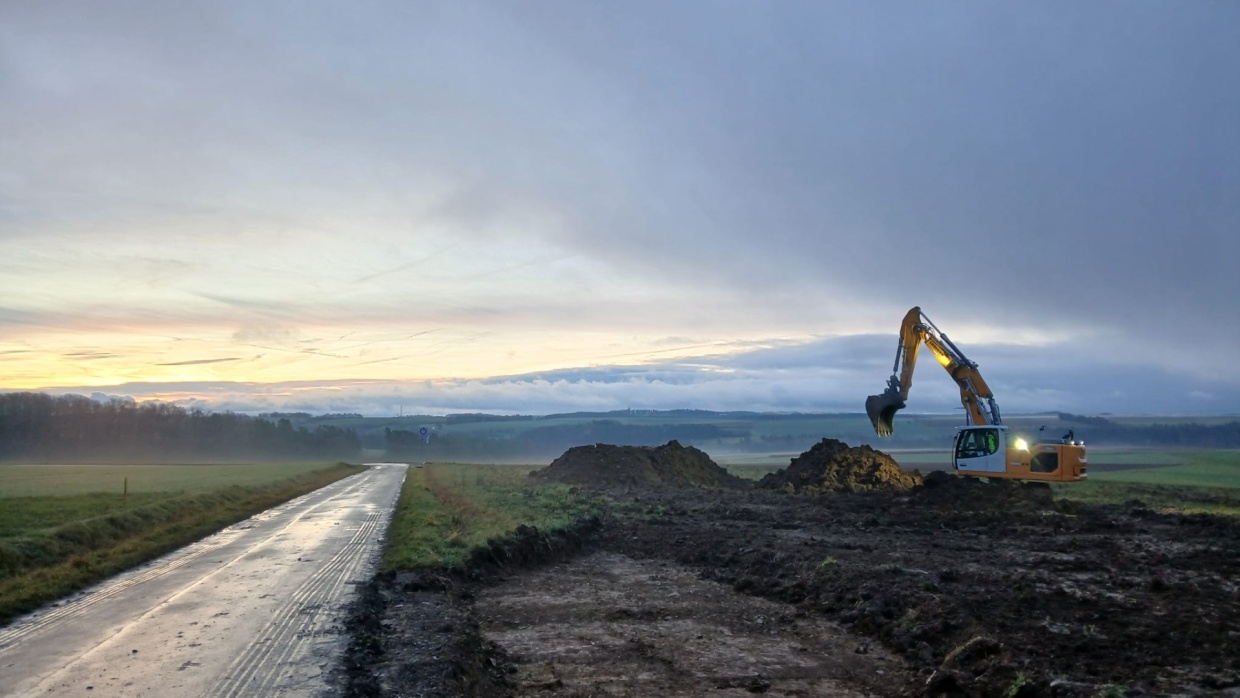
“Currently, we are facing the greatest challenge in the history of archaeology,” says Svenja Partheil. The president of CIfA Germany, the professional association for archaeology, chooses strong words when she speaks about the planned power lines that are to run from the windy north to the industrial south of the Federal Republic. Given the total length of these routes – 20,000 kilometers – it is clear that her words are just strong enough. This enormous project is scheduled for completion by 2048, and quite a few of the lines will run underground. If sustainability is desired in these projects, Partheil continues, then the sustainability of historical preservation must also be taken into consideration. Before archaeological monuments are irretrievably destroyed, they must be documented and archived, and in case of doubt, preserved in museums.
“We are not even in Roman territory yet!”
Sufficient skilled workers are needed for the project to succeed. However, there are currently more than 100 vacancies nationwide, both in state offices for archaeological monument preservation and in specialist companies. Demand is growing rapidly – energy companies are now hiring their own archaeologists in their planning departments, says Sascha Piffko, managing director of SPAU GmbH. His company is a prime example of the boom the industry is experiencing: in 2015, “Sascha Piffko Archäologische Untersuchungen” started as a small company with three employees. Today, “SPAU” is a limited liability company with over seventy employees who not only excavate, but also restore, document, and archive finds – and who are working at full capacity nationwide.
And that is despite the fact that the mega-project of the energy transition is just beginning. Piffko explains: "With SuedLink, a route of approximately 700 kilometers length and 35 meters width is currently being built – largely east of the former Roman territory. Other planned routes will be twice as wide, around 70 meters, and will then pass through Roman territory, which means more excavation sites and significantly higher costs. This represents a significant amount of work for at least two more decades, which can only be accomplished with a high level of expertise and experience."
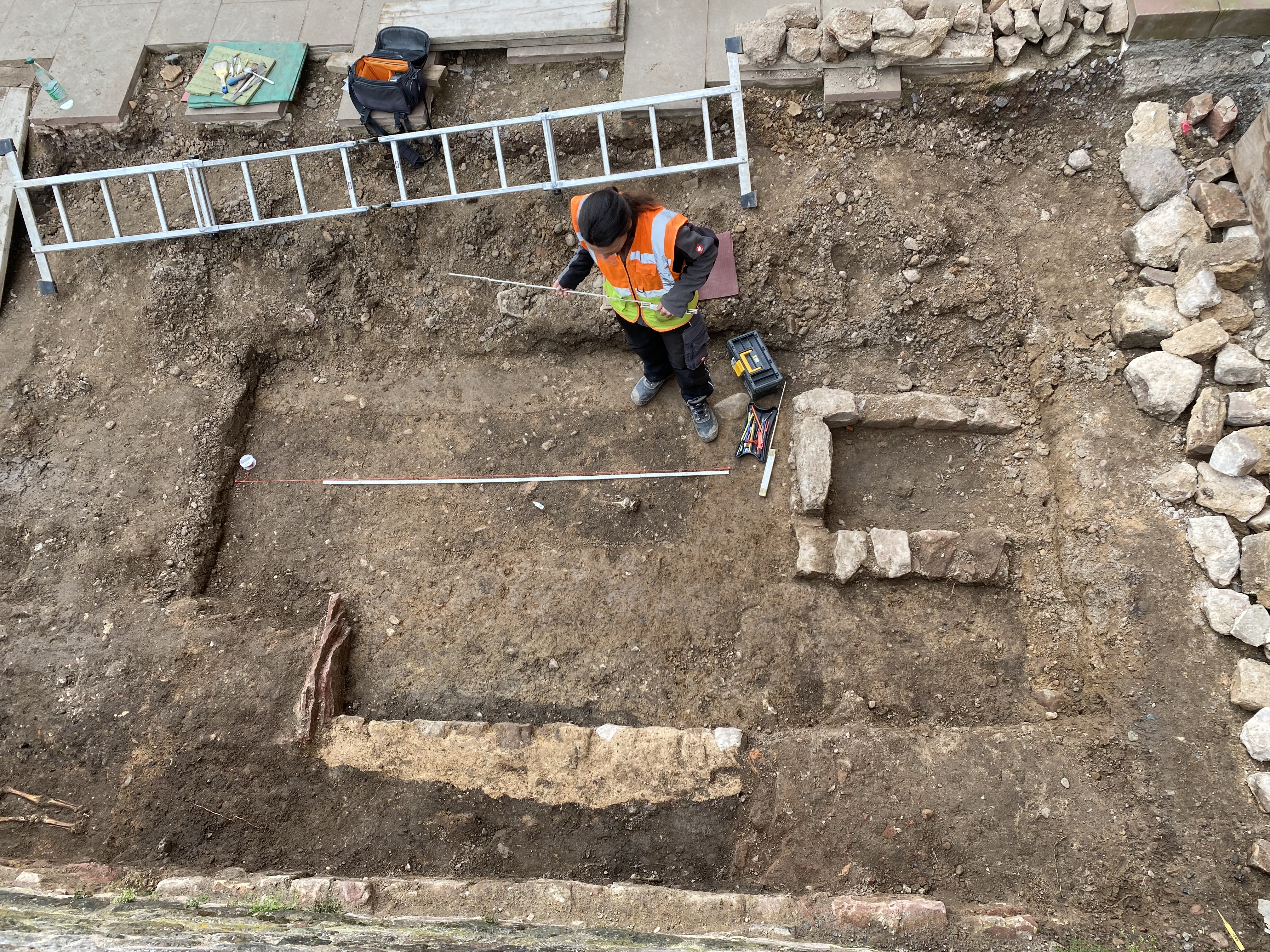
New exhibition area at denkmal 2026 highlights the growing importance of this sector
Partheil and Piffko are among the driving forces behind the new archaeology exhibition area at denkmal 2026. “Our aim is to highlight the growing importance of archaeology,” explains Partheil. “We are investing heavily in recruiting skilled workers and young talents. To do this, we need to show that archaeologists do not longer only work at universities or in the public sector, but are now urgently sought after by the private sector.”
Archaeology has long been a billion-dollar industry – and wants to present itself accordingly, not only at denkmal. This is also necessary because, paradoxically, professorships and degree programmes in archaeology or excavation technology are currently being reduced or even closed. The immense project of the energy transition, apparently, seems to be overseen. Partheil adds: “So far, we are only talking about power lines. In addition, there are new pipelines for gas and hydrogen, but also transformer stations and energy storage facilities, as well as an increasing number of data storage centres, logistics facilities and routes for the expansion of transport infrastructure – our work will increase significantly once again.”
She also has great expectations for a Europe-wide network, which will be facilitated by participation in the trade fair. “We would like to see more international attention for the topic and a boost for mutual support in the construction of power lines. That could at least somewhat cushion the shortage of skilled workers. Infrastructure expansion is a European project.”
Many roads lead to Rome – the common denominator with historic preservation
How does Piffko view his colleagues in architectural heritage preservation? “Very optimistically,” he says – with one limitation: “The methods used to approach a monument are very different.” Archaeological preservation involves technical work: objects are dated, their cultural classification determined, excavated, documented, and archived – not preserved in their original form. Architectural preservation, on the other hand, must preserve the building and works more from an art-historical perspective; lines of sight, the surrounding context, and current use play an important role. “All these issues are largely irrelevant to us,” says Piffko.
Is a common denominator even possible? “Of course,” he says. “Both areas are united by the question of how to deal with the past – what is culture and what constitutes cultures. We will certainly discuss this. Ground and building conservation can learn from each other and complement each other.”