

News
News
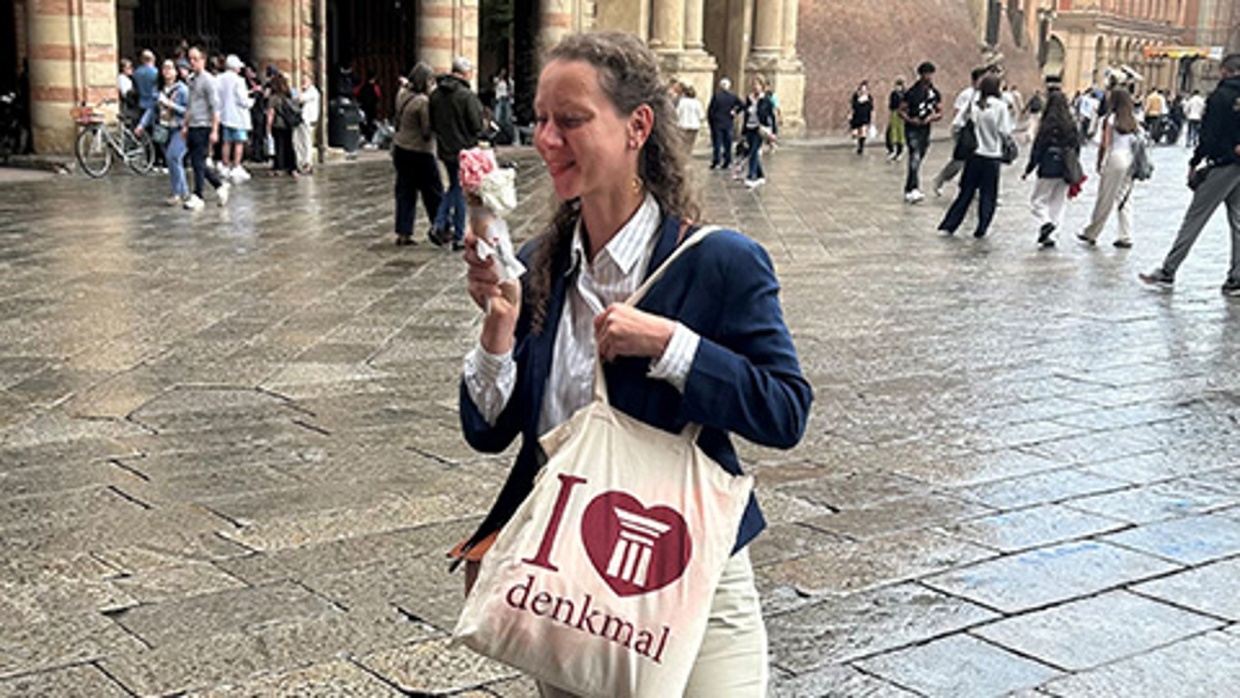
A journey to Italy, by Katarina Singer
In May, the Salone del Restauro took place in Ferrara, Italy. Katarina Singer, a member of the denkmal team, travelled there and returned with valuable experiences and inspiring ideas. Her report comes from a country with an extraordinary concentration of cultural heritage sites and extensive experience in dealing with earthquakes.
What expectations did you have before travelling to Ferrara, and were they fulfilled?
The denkmal team wanted to learn more about the Salone del Restauro, discover what was being presented there, and gain insights into how heritage conservation is practiced in Italy. After all, Italy is a country with an exceptionally high density of cultural monuments. We were particularly interested in identifying potential partners in Italy and understanding which topics are currently shaping the sector there.
Once I arrived, many things developed quite spontaneously. I had numerous unexpected but always enjoyable conversations. What impressed me most was the warm and open welcome I received. I hope we will be able to build on some of the contacts I made. I have great admiration for Assorestauro, the association dedicated to preserving Italy’s immense cultural heritage. They even organised a dedicated programme for the international delegation. That said, I would have travelled to Ferrara even without such an offer. It was especially rewarding to hear that denkmal is already recognised there as a brand.
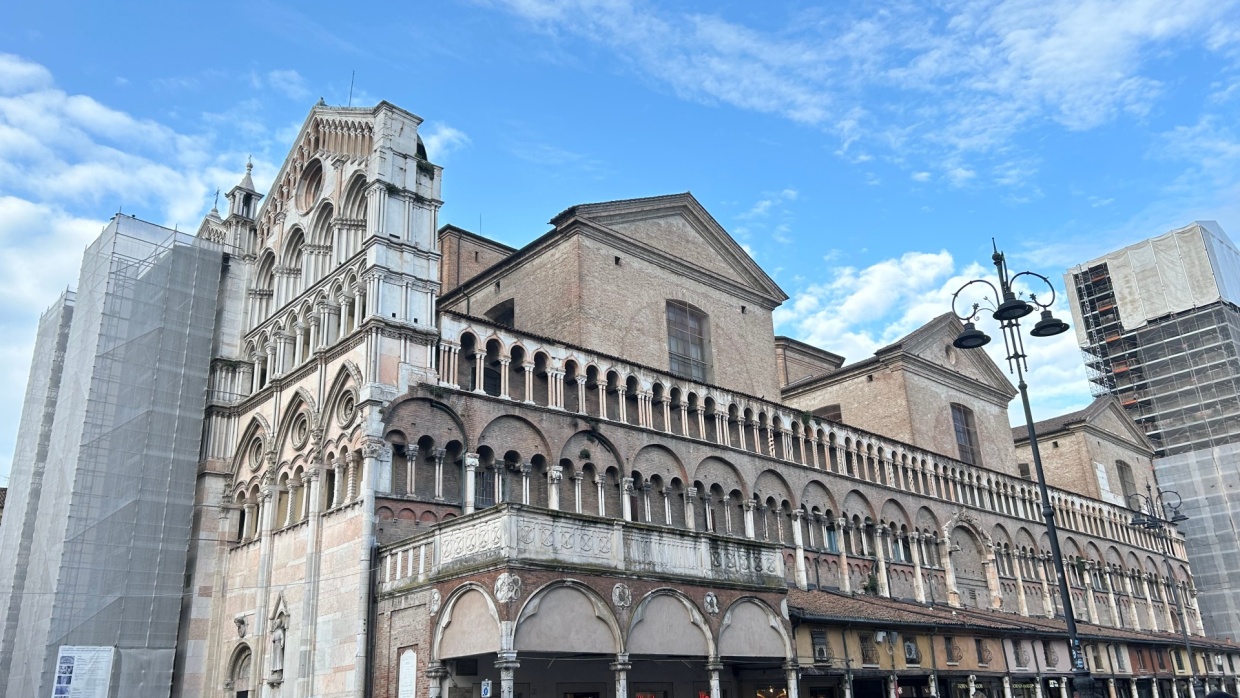
Ferrara Cathedral (Photo: Katarina Singer)
Were there any new materials or methods that particularly caught your attention?
My main focus was on projects involving medieval and Renaissance buildings. I was especially impressed by the visits to Ferrara and Bologna. In Ferrara, the cathedral provided a fascinating example. Following the 2012 earthquake, stabilisation and restoration work is still ongoing today. In Bologna, the effects of the earthquakes were particularly visible at the Church of San Francesco.
I am fascinated by the way historic structures can be secured while preserving their appearance as much as possible. There is a great deal we can learn from Italian conservation professionals. The scale and quality of the work being carried out in Italy is truly remarkable.
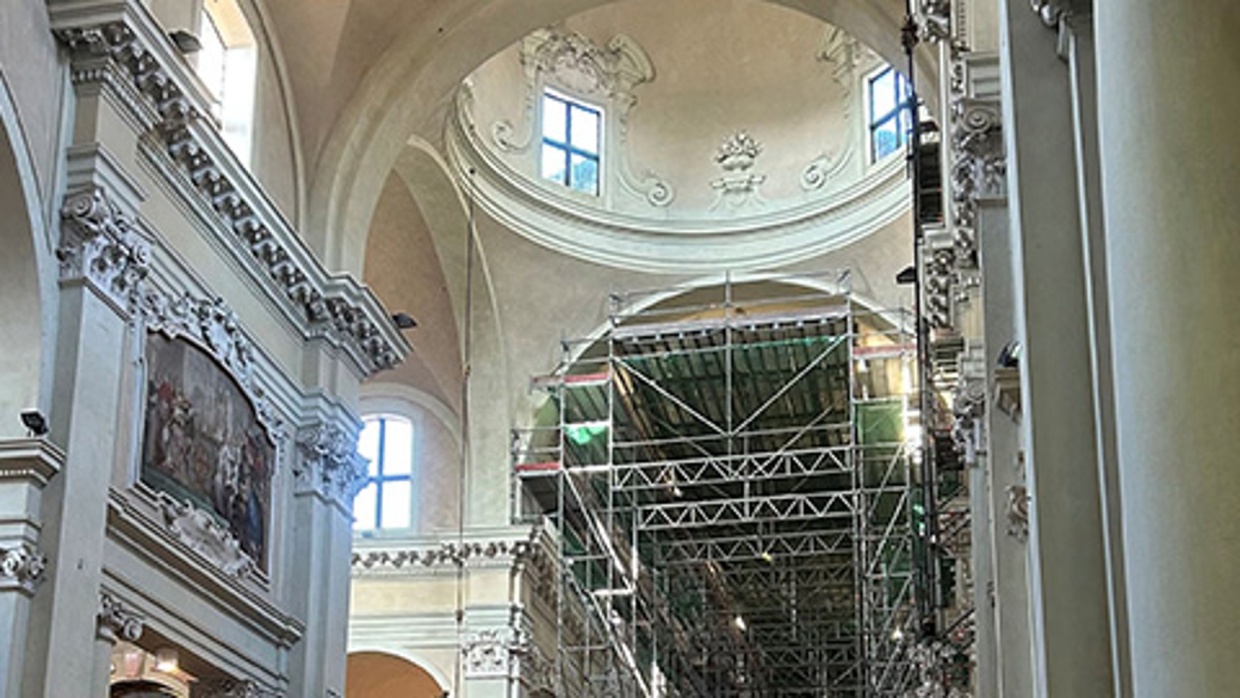
Basilica of San Domenico in Bologna (Photo: Katarina Singer)
What differences did you notice in the appreciation of cultural heritage compared to Germany?
The connection to history and cultural heritage is extremely strong. This includes, and perhaps especially applies to, historic buildings. At the same time, Italy possesses such a vast number of important monuments that some of them seem almost taken for granted by Italians, while visitors from abroad still stand before them in awe.
What ideas and impulses did you bring back from Ferrara for denkmal?
One important takeaway was the exchange with Italian institutions such as Assorestauro. Their appreciation for our interest in their work was clearly noticeable. The Salone del Restauro offers many opportunities for direct dialogue. Italy is incredibly rich in cultural treasures, and these deserve even greater international visibility.
From a thematic perspective, I was particularly interested in disaster preparedness and resilience. We also have to deal with challenges such as fires and flooding. It is important not only to react in emergencies, as was necessary after the 2012 earthquake, but also to develop preventive solutions. This is becoming even more important in the context of climate change. The protection of cultural heritage in emergency situations and climate-conscious, sustainable construction are two of the five pillars of denkmal.
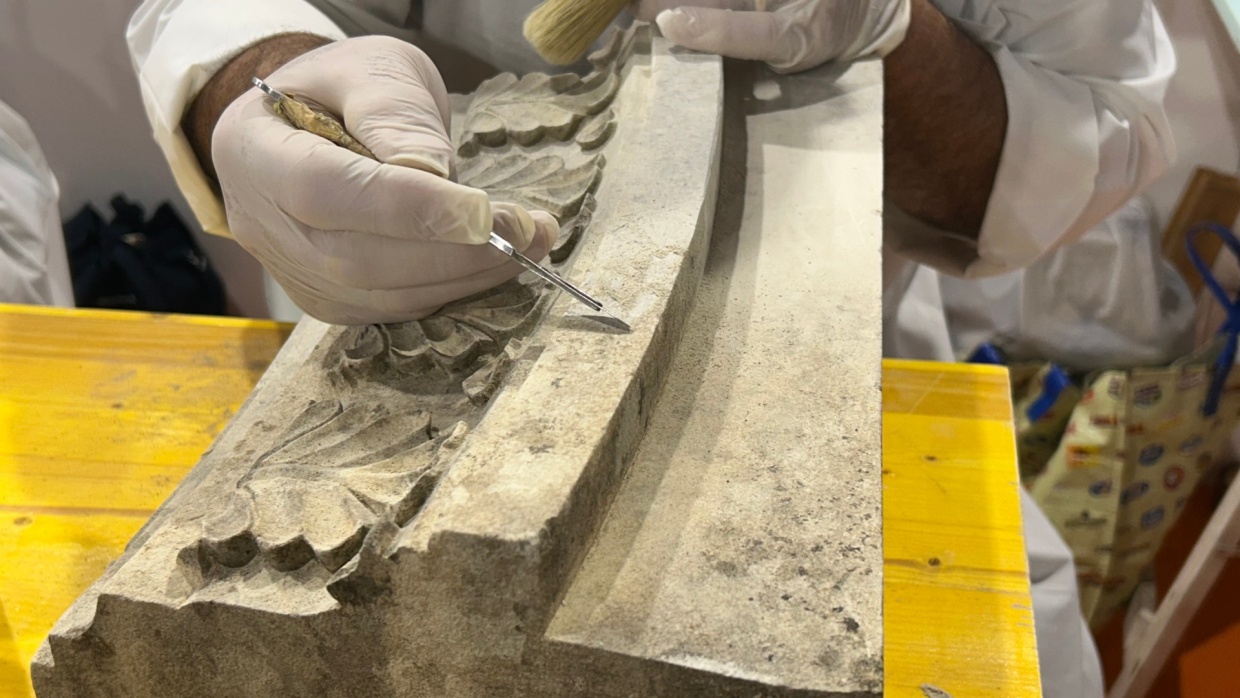
Training centres at the Salone del Restauro (Photo: Katarina Singer)
Which exhibitors or institutions would you like to see at the next edition of denkmal?
One particularly exciting company presented safety systems for working on historic structures. Using a VR headset, visitors could experience what it feels like to work at great heights. I tried it myself – standing firmly on the ground rather than hanging from ropes. Suddenly I found myself standing on top of a tower with what felt like a 100-metre drop below me, simulating different working situations.
Applications like these are also used for training conservation professionals and demonstrate the impressive possibilities modern technologies now offer.
I would also be delighted to welcome the Italian architects’ association SIRA – Società Italiana per il Restauro dell’Architettura to denkmal. There is considerable interest in stronger international networking. denkmal would be the ideal venue for this, bringing together experts from across Europe. Closer cooperation with the Italian Trade Agency would also enrich the European networking dimension of the fair.
What trade fair-related inspiration are you personally taking away from Ferrara?
I was particularly impressed by the excursions organised for international delegations, both in Ferrara itself and in nearby Bologna. They naturally encouraged interaction with participants from other countries. In addition to many Italians, I spoke with people from Ukraine, the United States, Bulgaria, Georgia, France, Brazil, and Lebanon.
I think similar excursions would be an excellent idea for Leipzig and would further strengthen the international character of denkmal. Leipzig alone offers a wealth of attractions. Alongside well-known historic landmarks such as the Monument to the Battle of the Nations, the city boasts a unique industrial heritage and important examples of East Modernism and socialist architecture. These are topics of growing interest within the heritage conservation community today.
And finally, Leipzig is one of the key locations of the Peaceful Revolution and, by extension, European reunification itself.