

News
News
Herrnhut: Restrained Baroque, a worldwide legacy
Symmetrical Baroque settlements and a clear architectural language shaped by the Christian community, with the prayer hall as a recurring focal point: within a short period of time, settlements were established from Herrnhut in the Lausitz that remain connected across countries and continents to this day. In this interview, Dr Uwe Koch, President of Europa Nostra Germany, discusses both living and endangered cultural heritage, the light and dark sides of the Moravian Church’s missionary history, and the new connections that can emerge at denkmal in Leipzig.
Dr Koch, in your view, what makes the cultural heritage of the Moravian Church so exceptional, beyond its religious significance?
In the 18th century, in Baroque era, this cultural heritage emerged within a relatively clearly defined period, inspired by an idea of Christian community. This is evident both in the architectural character of the settlements and in the design of the surrounding landscape. Another distinctive feature is their broad geographical distribution. The Moravian Church spread very quickly across numerous European countries and beyond. As a result, this heritage now connects many different places.
What common features unite the Moravian settlements and mission stations established around the world? And where are regional differences apparent?
Their characteristic features began to emerge in 1722. A restrained Baroque architectural style and an idealised, symmetrical arrangement of streets and buildings are typical. The distinctive design of the church hall also evolved during this period and can still be found at many sites today.
This systematic layout, originating in Herrnhut, can be traced in places such as Niesky in the Oberlausitz in Germany, Christiansfeld in Denmark and present-day Nowa Sól in Poland. Despite regional differences and losses, the architectural similarities remain clearly recognisable. One significant difference, however, is that active congregations no longer exist at every location to make use of these buildings.
Since 2024, Herrnhut (Germany), Christiansfeld (Denmark), Bethlehem (USA) and Gracehill (UK) have together formed a transnational UNESCO World Heritage Site. What does the relationship between these four places reveal about the Moravian Church’s international network?
It began with Christiansfeld, which was inscribed on the World Heritage List in 2015. Nine years later, the World Heritage Site was extended to include Herrnhut, Bethlehem and Gracehill. This has made the distinctive nature of the Moravian Church’s internationally connected and still living heritage far more visible.
Awareness of the value of the cultural heritage created by the Moravians has increased at the same time, even though not every site meets the criteria for World Heritage status.
During the European Year of Cultural Heritage in 2018, a brochure on Moravian settlements in Europe was published under the title “Moravians: From Saxony to Europe”. At many sites, this provided a significant impetus to engage more deeply with this shared heritage. The process is giving rise to new networks and new forms of cooperation between the different locations.
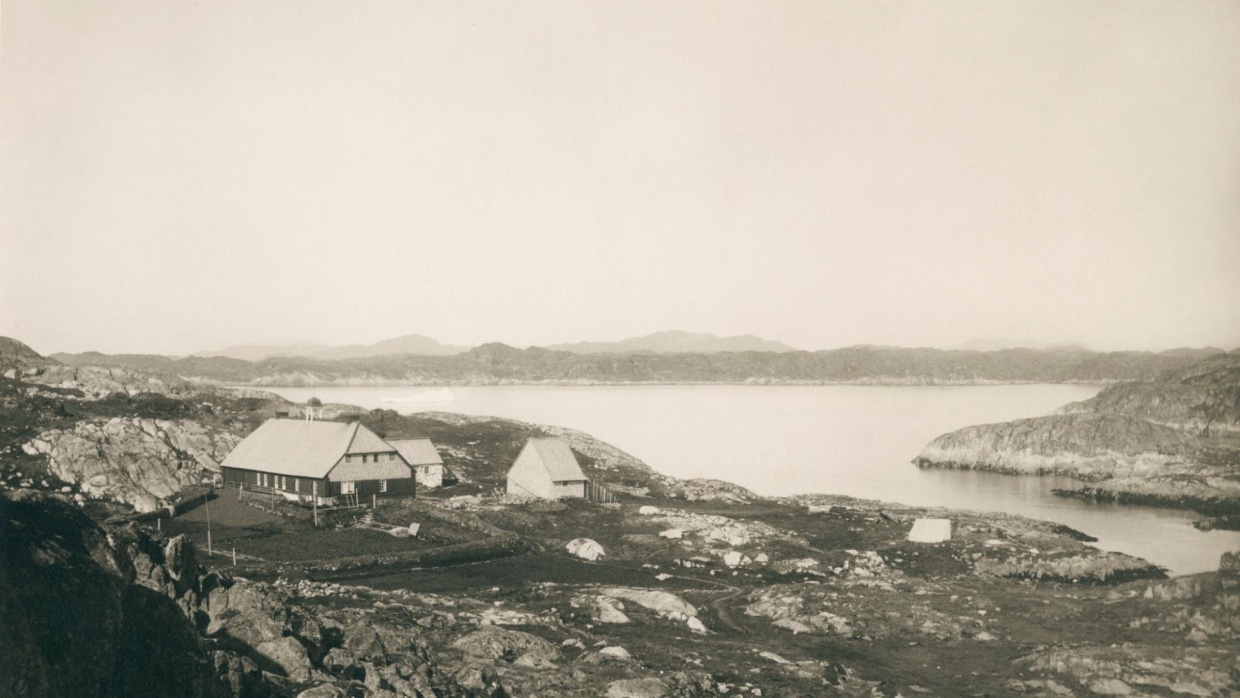
The Herrnhut mission station in Lichtenfels, Greenland, Photo by Th. N. Krabbe, between 1889-1909. This building burned down in 1981, Credits: Greenland Nationalmuseum & Archives
Many historic buildings are still used today as churches, homes, museums or educational institutions, while others stand empty and are falling into disrepair. What differences do you observe in the way Moravian heritage is treated?
Access to the buildings and their present-day use vary greatly from place to place. In Herrnhut itself, most buildings are still used for their original purpose. Just a few kilometres away in Kleinwelka, however, the situation is very different. The architectural heritage is still there, but in most cases its original use has been lost. This has caused considerable problems over the past few decades. Therefore, in 2019, an initiative was established to draw attention to the threat facing the Schwesternhaus ensemble and to campaign for its preservation. In 2023, it was included in Europa Nostra’s “7 Most Endangered” programme. Since then, the association working in Kleinwelka has sought to secure the buildings’ restoration and establish a viable new use capable of funding their long-term preservation. This challenge also arises at other cultural heritage sites where the original use no longer exists. The declaration of intent subsequently signed in Bautzen last year by the EBU, the towns and civil society initiatives was an important step towards securing the future of Kleinwelka, and of other sites beyond it.
The Moravian Church’s global missionary work was closely tied to European colonial structures. How can Herrnhut’s legacy be preserved and passed on without glossing over problematic aspects such as missionary activity?
That is an important point. The history of the Moravians also has its light and dark sides. From today’s perspective, we recognise aspects that require further critical examination and where research has not yet provided sufficient clarification.
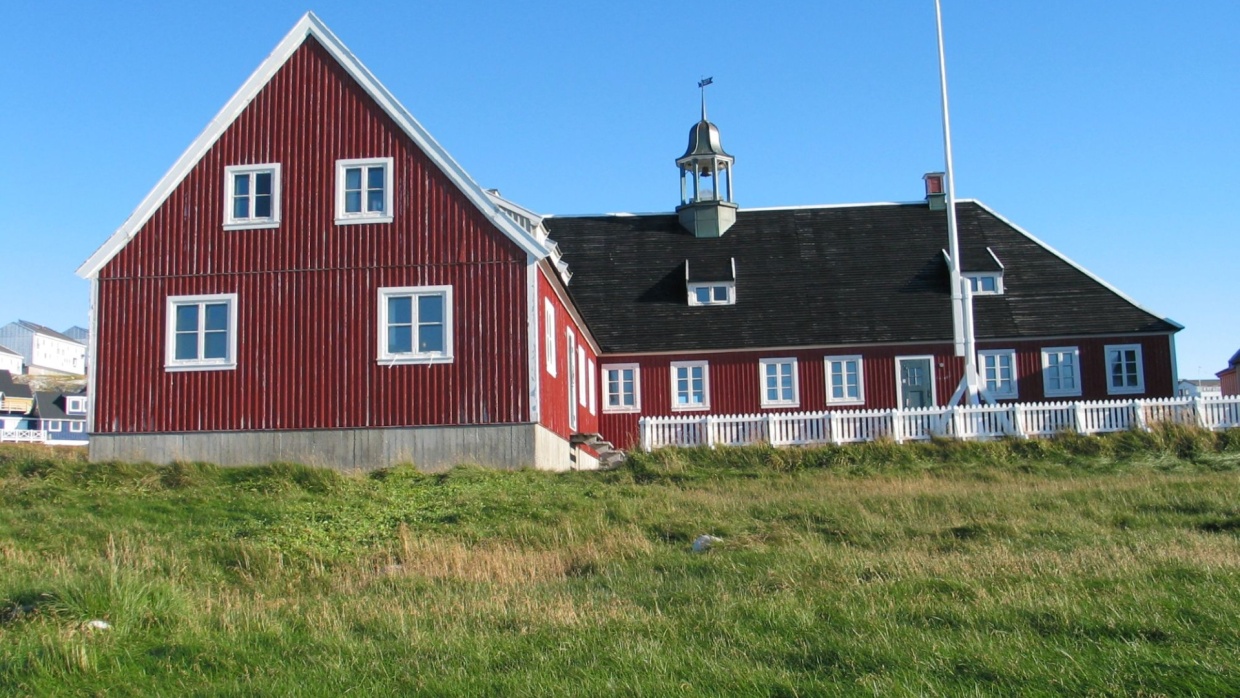
The collaboration with Greenland is a good example. Greenlanders themselves are engaging with this heritage and are very interested in documenting, recording and sharing it with others. For many, this is also a journey of discovery that raises further questions about the significance of this history and its many different facets. This plays a particularly important role in Danish-Greenlandic relations.
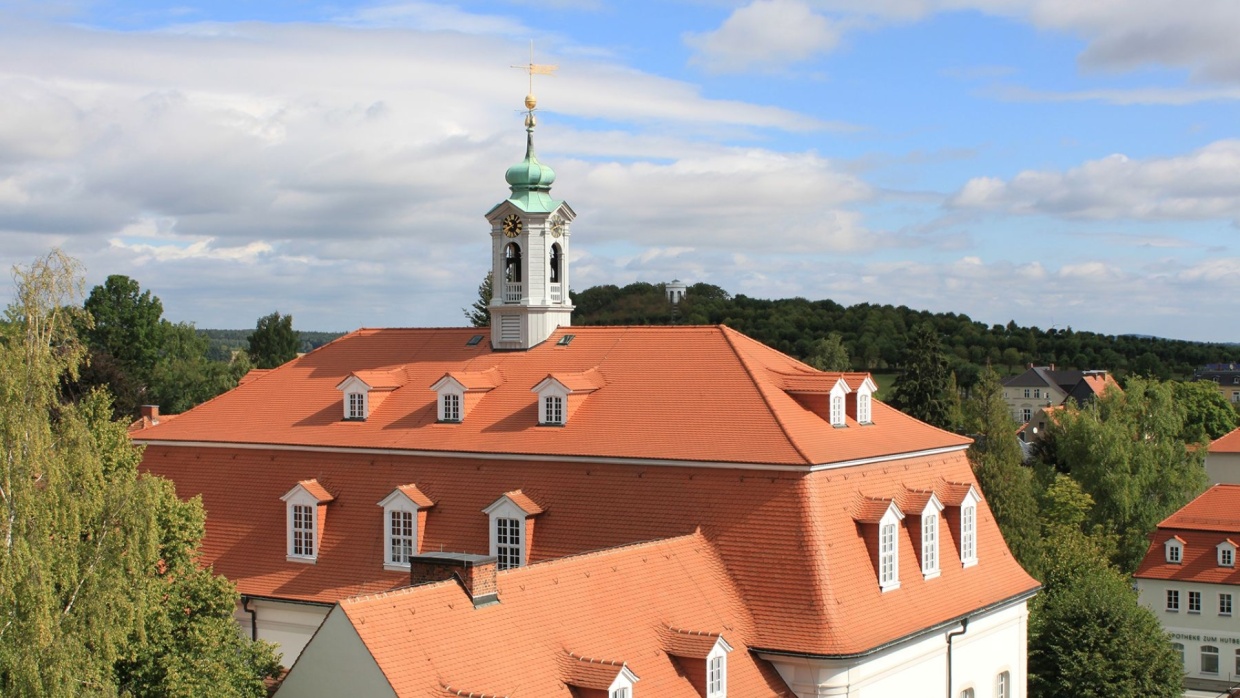
View on the Church Hall of Herrnhut in Oberlausitz, Saxony, Credits: Stadt-Bild-Verlag
Let us stay with Greenland for a moment. While New Herrnhut in the capital Nuuk remains in use, other mission stations in Greenland have been abandoned and, in some cases, survive only as landscapes of ruins. What challenges does this pose for their protection, research and interpretation?
I cannot speak about this from personal experience. That is precisely why Inge Bisgaard from the Greenland National Museum in Nuuk is coming to Leipzig. Using images and texts, she will show how these places came into being, how they have changed over time and what condition they are in today.
For me, one important goal at this year’s denkmal is to involve Greenland more closely in European heritage conservation. Greenlanders value Leipzig as a place for networking and as a meeting point between East and West. Conversely, we are keen to learn about the experience and conservation techniques that Greenlanders bring with them. Engaging with Moravian heritage in Greenland can thus attract new attention and generate fresh momentum.
Well, on 7 November, the final day of denkmal, what would make you say: “this was a successful denkmal’?
I would like to learn a great deal that is new to me. denkmal is a first-rate forum for exchange – for ideas and technologies, but above all for people and their commitment. It brings together those who are taking historic monuments into the future. denkmal makes an important contribution by enabling these encounters. Even in the years before the coronavirus pandemic, we saw the momentum they could generate. That made it all the more rewarding to pick up where we had left off afterwards. When it comes to meeting people face to face, Leipzig is unbeatable. If that happens again this year, then it will have been a successful denkmal for me.