

Archaeology comes to denkmal amid what may be the greatest challenge in its history
For the first time, archaeology will have its own dedicated exhibition area at denkmal. What makes this debut so special? It will bring archaeological heritage conservation – archaeology, in other words – and built heritage conservation together in a prominent setting at denkmal. The new exhibition area has been prompted in particular by the extensive infrastructure projects associated with Germany’s energy transition.
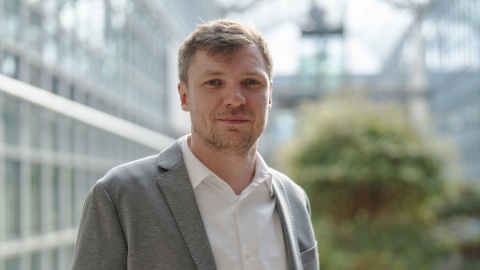
More than 25 companies, associations and academic institutions have already registered for the archaeology exhibition area. This marks the first time that archaeological heritage conservation will feature prominently at denkmal, the European Trade Fair for Conservation, Restoration and Old Building Renovation. Constantin Strobel, Project Director of denkmal, says: “We are overwhelmed by the tremendous response to our new exhibition area. It demonstrates just how much the importance of archaeology has grown. We would particularly like to thank CIfA and all the organisations and individuals involved, without whom this initiative would not have been possible in its current form.”
Power transmission corridors uncover numerous new finds
The topic’s growing relevance stems from the energy corridors that will soon transport energy from Germany’s wind-rich north to its industrial south. Taken together, the planned underground infrastructure – comprising electricity grids, hydrogen pipelines and future CO₂ pipelines – could extend for up to 20,000 kilometres. The resulting groundworks may affect archaeological sites, which must be investigated, documented and, where necessary, safeguarded before or during construction. The infrastructure programme is scheduled for completion by 2048.
Svenja Partheil is President of CIfA Deutschland, the professional association for archaeology. Looking ahead to the coming years, she says: “This is the greatest challenge in the history of archaeology.” The longer and more densely a region was settled in the past, the greater the likelihood of encountering archaeological remains during construction. Once the corridors pass through such areas, the workload will increase considerably, as will the number of excavation sites, Partheil explains. Her association therefore aims to raise awareness of archaeology’s growing importance. “Archaeologists no longer work solely at universities or for public authorities. Their expertise is now urgently sought by the private sector as well. That requires skilled professionals.”
Partheil is concerned about the current revisions to heritage protection legislation: “They weaken our ability to safeguard archaeological heritage quickly and comprehensively and risk its destruction.”
Looking forward to defining moments at denkmal
denkmal 2026 promises to be an exciting event. Strobel gives several examples of the moments he expects to see: “Young professionals will come to denkmal inspired by archaeology and the infrastructure projects surrounding the power transmission corridors. Archaeological and built heritage conservation will come together, and we will see knowledge and experience from different fields combine to help deliver a key project of the energy transition. We are very much looking forward to it – not least because denkmal can make a decisive contribution to a project of enormous importance.”