



The musical fingerprint of bells – a tool for digitising bells and for early detection of damage

2:00 PM - 3:00 PM Fri, 06 Nov

Short description

When ringing, bells are subjected to high mechanical stresses which can lead to fatigue cracks. Traditional testing methods often detect damage too late, by which time the sound has already been affected. A new method, the ‘musical fingerprint’, uses audio recordings to identify cracks at an early stage by analysing natural frequencies and mode splitting. It detects casting defects and enables comprehensive documentation of the bells as cultural heritage objects, whilst detailed sound analysis data is stored for future inspections to identify changes in tone and their causes.

Description

When ringing, bells are subjected to high mechanical stresses which can lead to the formation of fatigue cracks. Using standard materials testing methods, such damage can usually only be detected once the crack has progressed to a stage where the bell’s tone has already been permanently altered or the bell has even been destroyed.

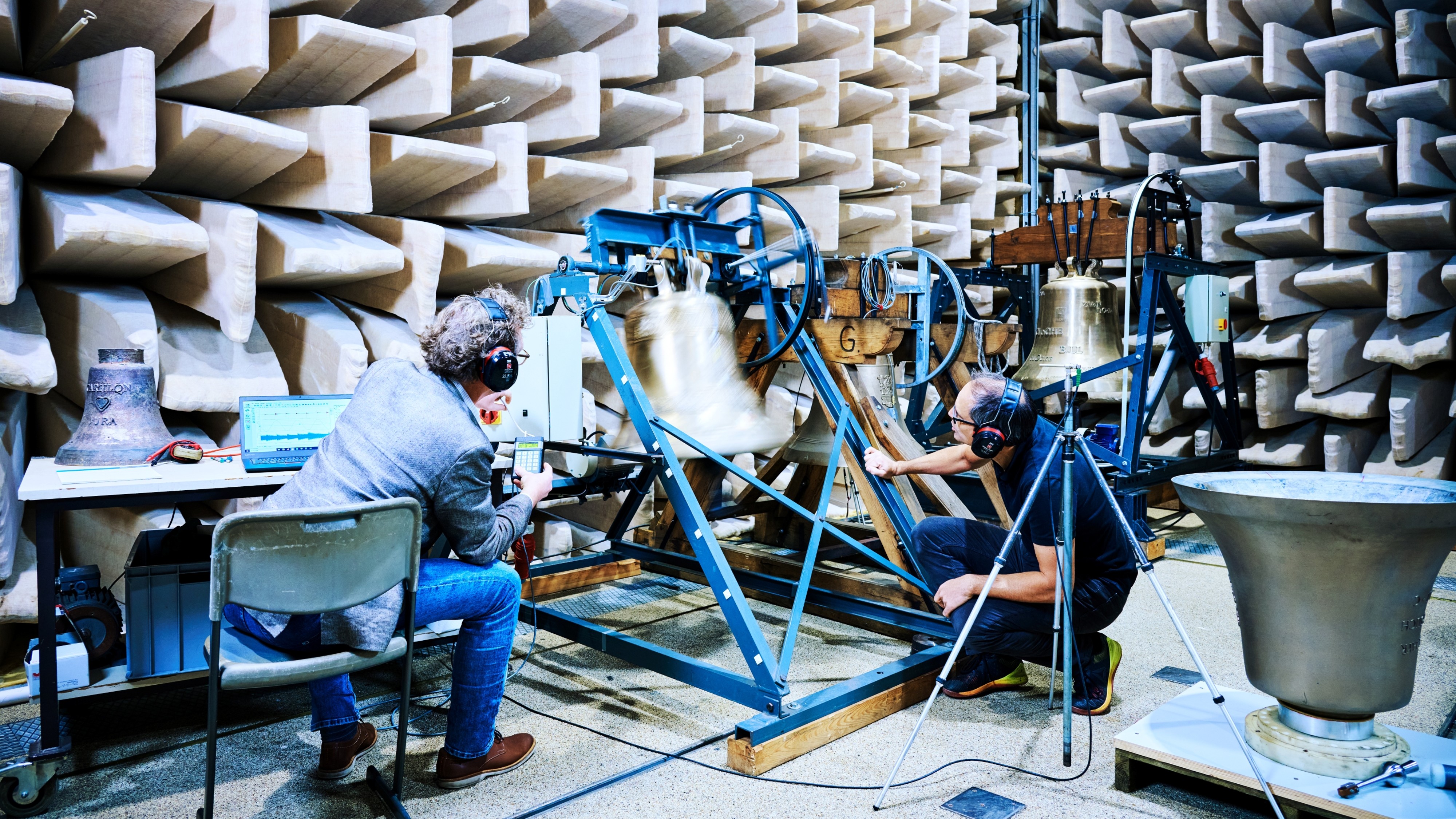
The ‘musical fingerprint’ of bells describes an analytical method that assesses the condition of bells on the basis of sound recordings. It is capable of detecting cracks in the bell body at such an early stage, before they lead to audible changes in tone. The method is based on a detailed analysis of the bell’s sound, which results from the complex vibrational behaviour of the structure and is essentially characterised by the bell’s natural frequencies. In particular, the vibrational phenomenon of mode splitting in rotationally symmetric structures is utilised to determine and evaluate frequency splits in the natural frequencies.

On the basis of the natural frequencies and their tonal divisions, the individual vibrational behaviour of each bell can be clearly assessed from its sound. On the one hand, it is possible to identify the influence of defects (such as casting flaws or material spalling) and bell decorations (such as inscriptions or ornaments) on a bell’s sound; on the other hand, damage such as wear at the striking points or cracks can also be detected, distinguished and assessed in terms of their position and extent.

Furthermore, the musical fingerprint offers the opportunity to comprehensively document bells as valuable cultural assets. Whilst most databases and bell atlases have so far contained only information on the striking tone, it is now possible not only to store more detailed data on the partial tone structure, but also to record information on the bell’s current condition. The stored sound analysis serves as a reference for future analyses, enabling changes in sound to be clearly identified and the causes of changes to the bell to be determined with a high degree of reliability. This provides a particularly reliable tool, especially for bells that have previously been damaged or repaired, for monitoring the progression of cracks or the development of new damage and for taking protective measures at an early stage.

probell.de

Speaker

Information about the program

Event Location

CCL, Lecture room 9, Level +2

Exhibitors