

News
News
Historic building materials: “Sustainability has always been second nature to us”
Whether reclaimed bricks, centuries-old oak beams or weathered sandstone fountains, historic building materials are far more than relics of the past. In this interview, Sabine Prenzel, Chair of the German Association of Historic Building Materials (Unternehmerverband Historische Baustoffe e. V.), explains why reuse has always been integral to traditional craftsmanship, which materials are most sought after today, and why the careful dismantling of historic buildings plays a vital role in a circular construction economy.
Ms Prenzel, the reuse of historic building materials is no longer discussed solely within heritage conservation. It has become increasingly important in the context of the circular economy and sustainable construction, giving rise to concepts such as re-use and urban mining. How have you seen this development evolve?
For us, this has never been a new trend—it has always been central to our work. We specialise in building materials produced before the industrial era, broadly up to the end of the Second World War. Urban mining, by contrast, often focuses on much newer materials, many dating from the 1980s and 1990s. In that respect, we are still operating in a rather different field from those who have only recently embraced the reuse of construction materials.
Which historic materials are currently most in demand?
Historic clay bricks, old oak beams, roof tiles, traditional stone and cement floor tiles, and natural stone such as sandstone and cobbles are particularly sought after. Doors and windows also remain important, although the market has changed. Demand for historic doors, in particular, has declined because the cost of restoring them to a professional standard has increased significantly.
What has this growing interest meant for your association?
The association was founded in 1992 and now has around thirty member companies. Over the years, we have built a strong professional network. Although many of us work independently within our own regions, together we have created a nationwide community where knowledge and experience are readily shared.
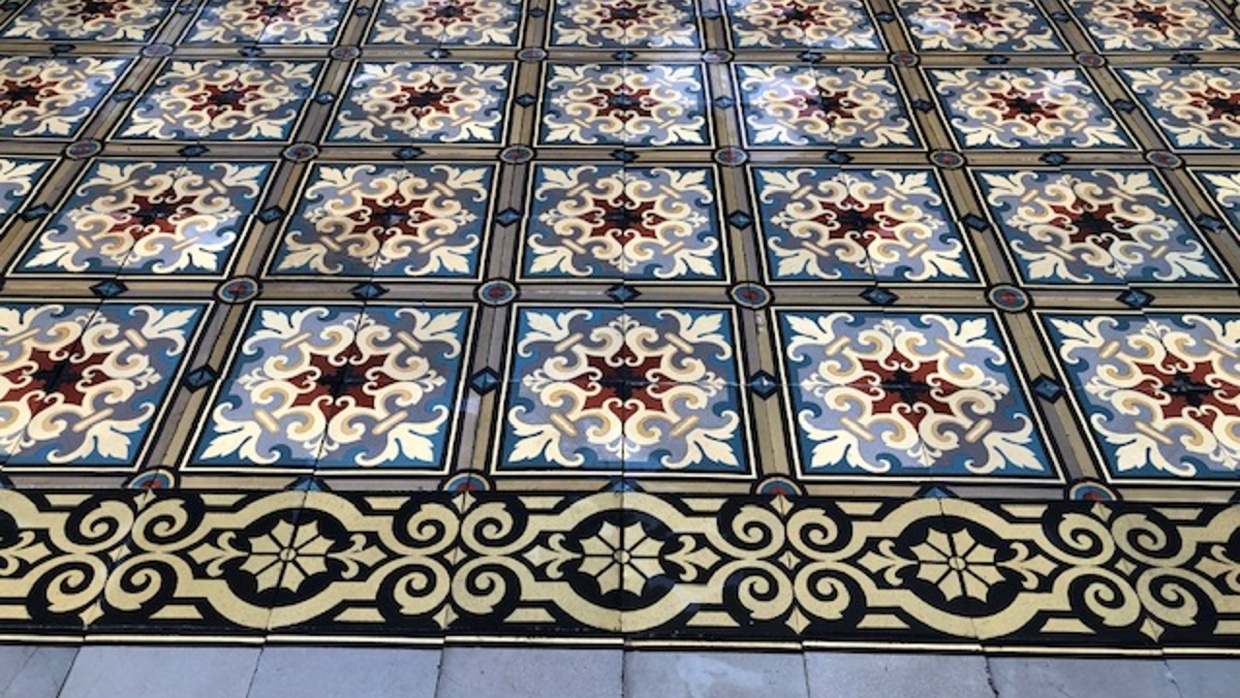
Too beautiful, too precious to discard – Renaissance stoneware tiles, Copyright: Historische Baustoffe Prenzel
Many people associate dismantling old buildings with demolition. What distinguishes a truly conservation-led and resource-efficient approach?
Everything begins with a thorough survey of the building. Which materials are present, and which can be salvaged? The key is to recover every element carefully and separately so that its quality is preserved. This often requires painstaking manual work, as heavy machinery would damage many valuable components. The ultimate expression of this craft is translocation—carefully dismantling an entire building before faithfully reconstructing it elsewhere.
How often have you been involved in a translocation project?
My own company has carried out two or three such projects. Across our association, however, there is considerably more experience. One colleague in the Ostalb region, for example, dismantled a former school building piece by piece before rebuilding it in a new location, where it now enjoys a second life as commercial premises.
What usually leads people to contact you about salvaging historic building materials?
Most enquiries come from people who either want to prevent valuable materials from being lost for sustainability reasons or who wish to sell them. Listed buildings are rarely demolished, of course, but many other historic buildings contain architectural elements that are well worth preserving.
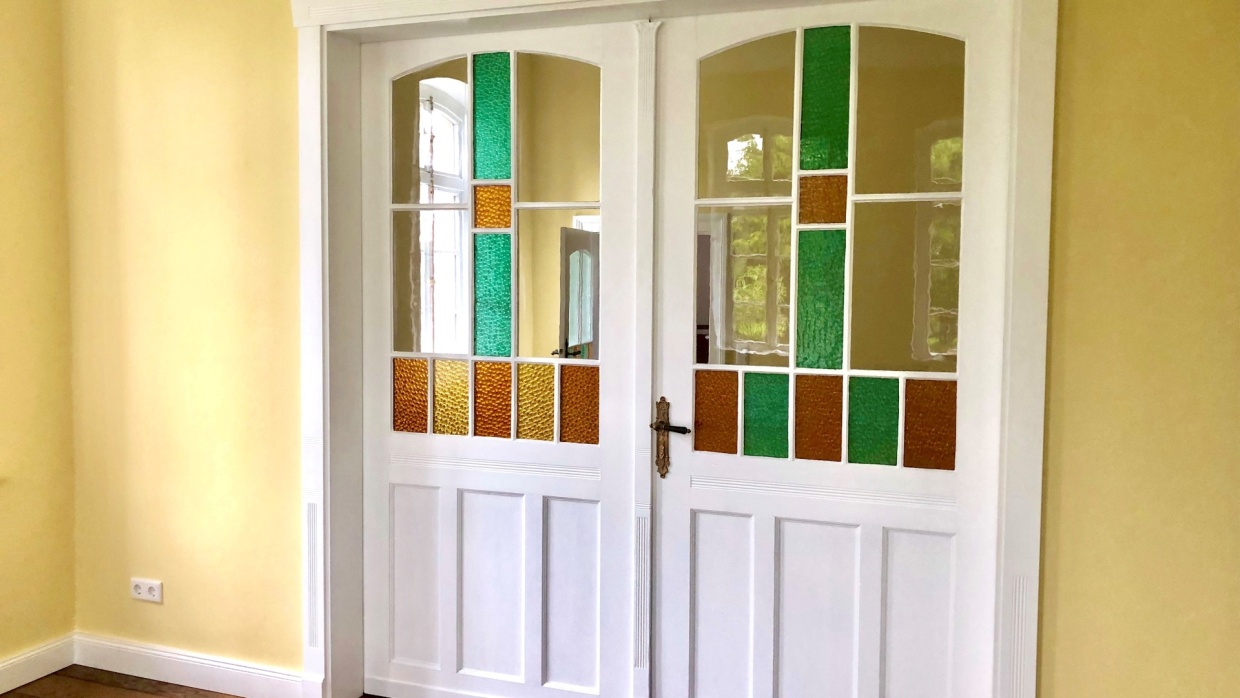
The Charm of Historic Doors at Home, Copyright: Historische Baustoffe Prenzel
How do you recognise when a historic building material is genuinely worth saving?
Its craftsmanship often tells the story. We look at the quality of the material, its rarity, the patina it has acquired over time—copper is a good example—and whether it is characteristic of a particular region. These are the qualities that transform an old material into something truly irreplaceable.
Are there any materials or architectural elements that have become particularly rare and are therefore especially valuable for restoration projects?
Absolutely. Historic bricks exist in countless different formats, but early monastery-format bricks have become exceptionally difficult to source. Long oak ceiling beams are equally scarce, while sandstone fountains remain highly sought after. Among the greatest treasures are decorative patterned tiles from around the turn of the twentieth century. Whenever there is an opportunity to salvage such pieces, it feels like rescuing a small fragment of history.
Sustainability has become one of the defining themes of today's construction industry. What role can historic building materials play in the transition to a more circular construction economy?
In quantitative terms, reclaimed historic materials still occupy a relatively small niche. Yet sustainability has always been fundamental to our work—it has never been an afterthought. I am encouraged to see public awareness continuing to grow, although there is still considerable scope for putting these ideas into practice. That is where our decades of experience can make a real contribution.
Your association has been exhibiting at denkmal since the very first event in Leipzig. What have you taken away from previous editions, and how do visitors respond?
For us, denkmal remains one of the highlights of the year and an essential meeting place for the heritage sector. The professional exchange is invaluable, bringing together an extraordinary depth of expertise from Germany and across Europe. As an association, we have also developed an online platform that connects those looking for historic building materials with those able to supply them. At denkmal 2026, we look forward to placing this platform centre stage and showcasing how it helps give historic materials a new future.