


News
News
Powering Bavaria's historic roofscapes
For many years, photovoltaic systems and listed buildings were widely seen as an unlikely pairing. Today, however, technological innovation and an evolving legal framework are proving that heritage conservation and climate action can go hand in hand. Three denkmal exhibitors demonstrate how this balance can be achieved in practice: ML System from Poland, Roofit.Solar from Estonia and PREFA from Austria. What do they have in common? Each has successfully brought solar power to some of Bavaria's most treasured historic buildings.
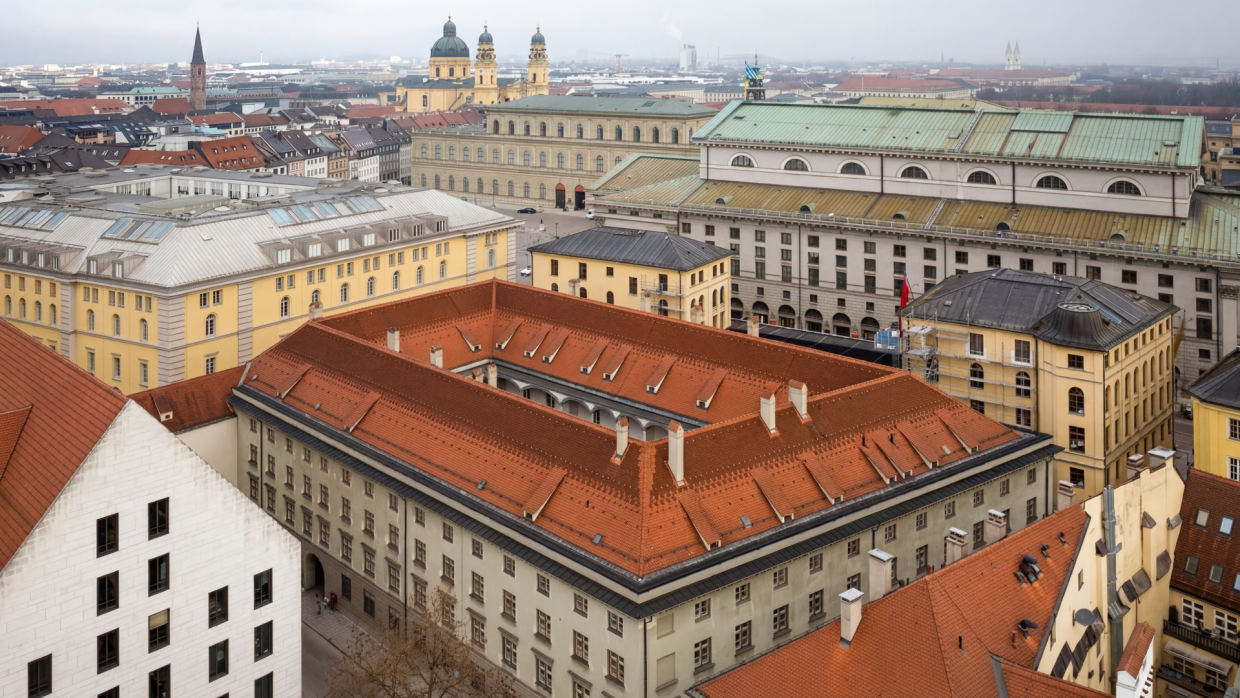
The Alte Münze (Old Mint) in Munich, the Angermühle Clinic in Deggendorf and St Charles Borromeo Church in Nuremberg share more than their listed status. Each now generates renewable energy through photovoltaic systems that blend almost seamlessly into the historic roofscape, preserving the buildings' distinctive architectural character. At the Alte Münze—now home to the Bavarian State Office for Heritage Preservation—ceramic photovoltaic roof tiles developed by ML System are helping to demonstrate how renewable energy and historic architecture can coexist in remarkable harmony.
ML System has integrated its photovoltaic technology either into individual ceramic roof tiles or into discreet modules comprising up to six tiles. According to the company, this flexible design makes particularly efficient use of the available roof surface, maximising electricity generation while preserving the historic character of the building.
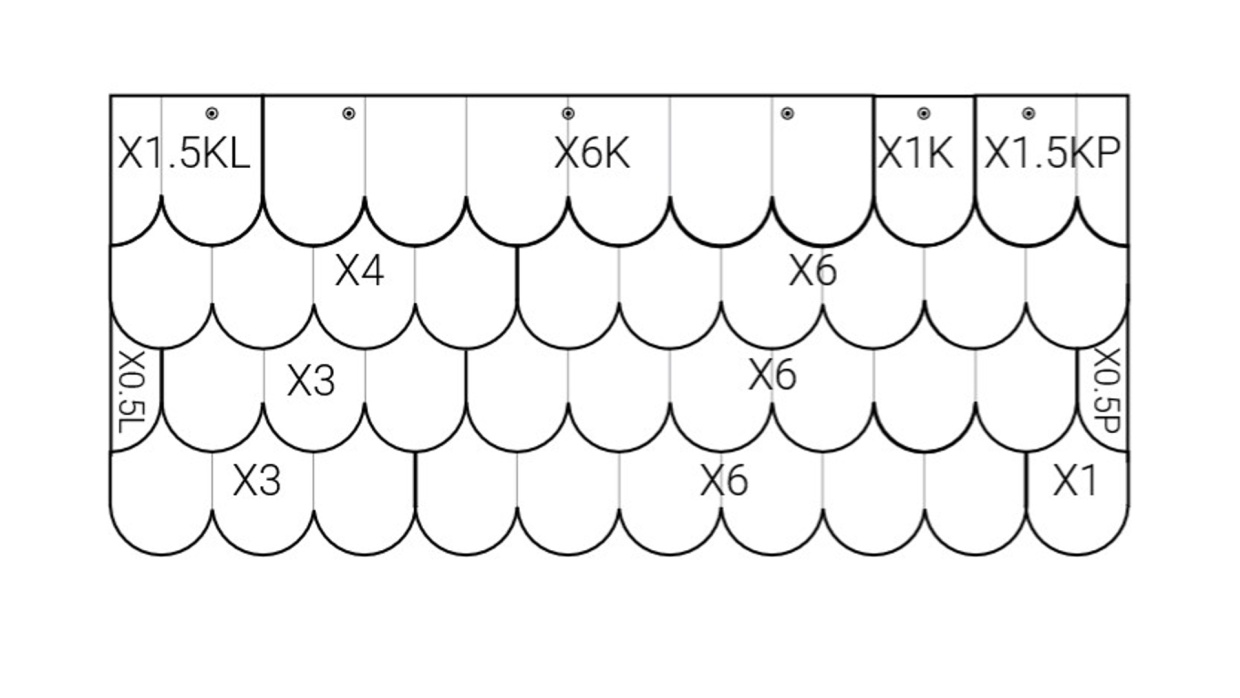
Modules comprising between one and six roof tiles form a compact photovoltaic array. Copyright: ML System
Covering around 385 square metres of roof surface, the installation delivers a peak output of 30 kilowatt-peak (kWp). Up to 98 per cent of the electricity generated is consumed directly within the building itself.
The Estonian company Roofit.Solar has taken a different approach. Its system is built around steel roofing panels with integrated solar cells, protected by a layer of toughened laminated glass. One of its greatest advantages—and one that is particularly appealing from a heritage conservation perspective—is that the photovoltaic technology forms an integral part of the metal roofing itself, rather than being installed as separate framed panels above the roof.
One example can be found at the Angermühle Psychosomatic Clinic in Deggendorf, Bavaria. From street level, the roof appears to be nothing more than a sleek, dark standing-seam metal roof, discreetly preserving the building's historic appearance while quietly generating renewable energy.
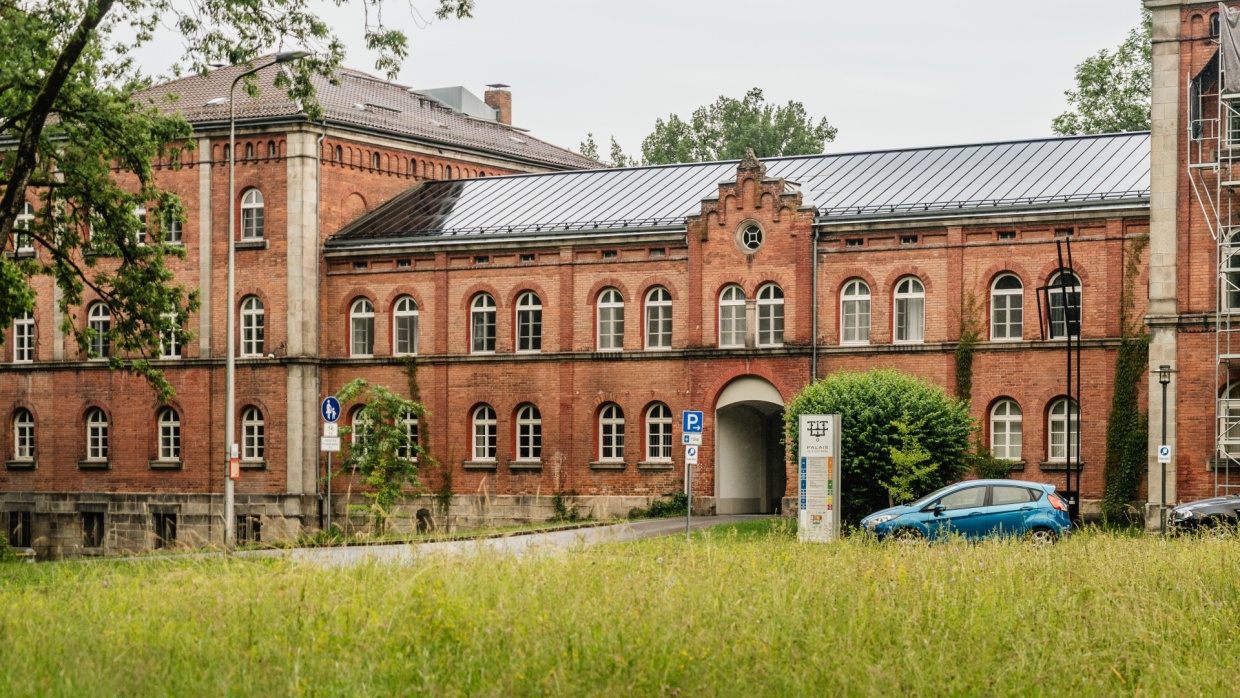
Angermühle Clinic with Roofit.Solar's integrated solar roof – no cabling or mounting systems are visible, allowing the historic roofline to remain beautifully uninterrupted, Copyright: Roofit.Solar
A changing legal landscape
The growing use of photovoltaic systems on historic roofs is not driven by technological innovation alone. Over recent years, the legal framework has also evolved significantly, making it easier to reconcile heritage conservation with climate action.
In Germany, a major step came with the 2022 amendment to the Renewable Energy Sources Act (EEG), which classifies renewable energy as being "of overriding public interest" and serving public safety. Although the legislation itself contained no specific provisions on heritage conservation, it paved the way for Germany's federal states to revise their own heritage laws, while the courts established new legal precedents.
A landmark decision followed in June 2023, when the Higher Administrative Court of Lower Saxony ruled that "listed buildings, too, should contribute towards achieving ambitious climate targets" (Case 1 ME 15/23). The Court found that where the visual impact on a listed building is minor and fully reversible, permission for renewable energy installations should generally be granted.
Poland has yet to introduce comparable legislation. According to ML System, guidance issued by the Polish General Heritage Conservator adopts a more cautious approach than Germany's legal framework. Even so, heritage authorities cannot reject photovoltaic proposals outright; each application must be assessed on its individual merits. Approval is possible where additional structural loads remain minimal and modern technologies reduce the visual difference between photovoltaic systems and traditional roofing materials to an almost imperceptible level.
A similarly pragmatic approach can be found in Estonia, home to Roofit.Solar. Here, too, every application is considered individually. In Tallinn, for example, preserving the original roof structure is a key priority. As long as mounting systems are fully reversible and do not damage the historic fabric, planning permission will generally be granted.
What all of the countries mentioned here have in common are the developments at the European Union level. While the protection of cultural heritage is not an EU competence, the combination of photovoltaic systems and listed buildings has nevertheless gained momentum through legislation from Brussels. Under EU law, renewable energy has now been recognised as an overriding public interest. As a result, permitting procedures for solar installations are intended to become more efficient. However, the EU leaves it to the individual Member States to decide how to balance the expansion of renewable energy with the protection of their historic buildings.
Lightweight by design – Photovoltaics on aluminium
Austria, too, has seen significant movement in this area as an EU Member State. In March this year, the Austrian Constitutional Court overturned a blanket ban on photovoltaic installations in the historic centre of St. Pölten, the capital of Lower Austria. Until then, the city had prohibited PV systems wherever they were visible from public spaces.
The ruling has been welcomed by PREFA, one of denkmal's Austrian exhibitors. The company specialises in aluminium solar roof panels that cover larger roof areas while closely replicating the appearance of traditional roof tiles. PREFA regards the Court's decision as an important milestone in enabling sustainable solar energy solutions within historic townscapes.
The company has already completed a number of projects that successfully combine climate-conscious innovation with sensitive heritage conservation. One outstanding example is the restoration of the roof of St Charles Borromeo Church in Nuremberg, where photovoltaic technology has been seamlessly integrated into one of Bavaria's most distinctive historic landmarks.
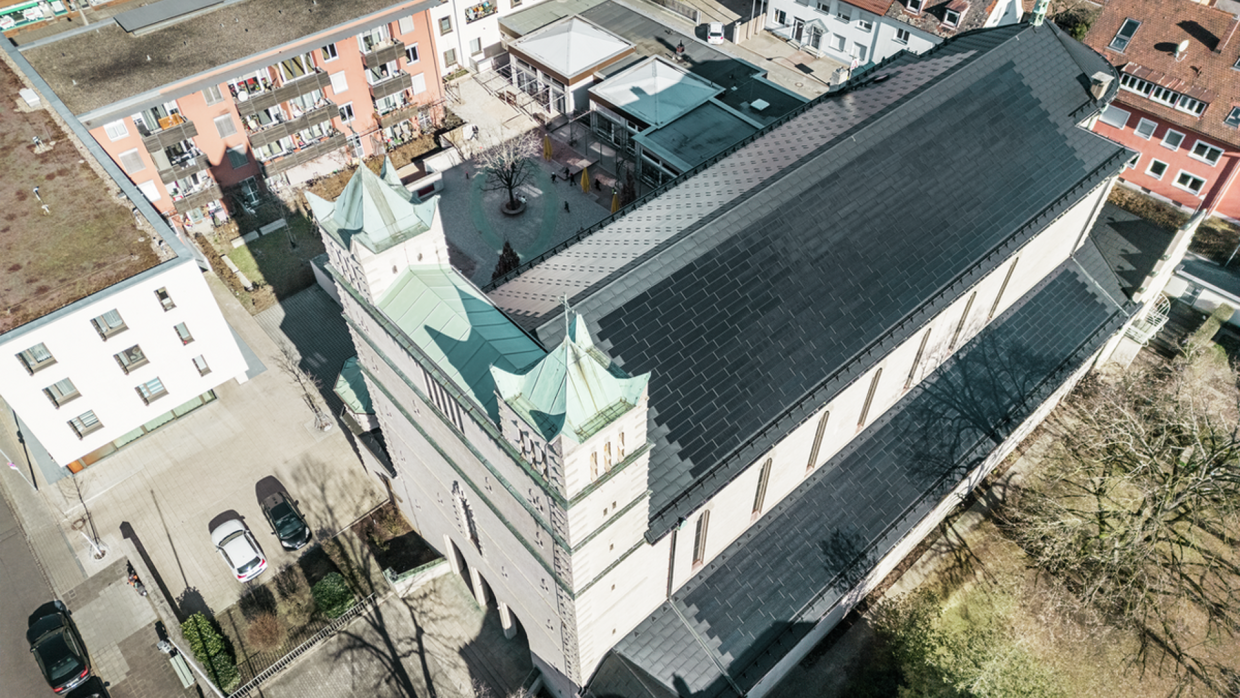
An 800 m² expanse of solar panels crowns a listed building designed in the Franconian Expressionist style, Copyright: PREFA / Croce & Wir
The photovoltaic cells are mounted on aluminium panels whose shape and colour have been carefully matched to the original roof. Today, the installation is recognised as Bavaria's largest photovoltaic system on a church roof. Covering 800 square metres, it generates enough electricity not only to meet the church's own energy needs, but also to supply neighbouring buildings, including a nursery and 38 residential units.
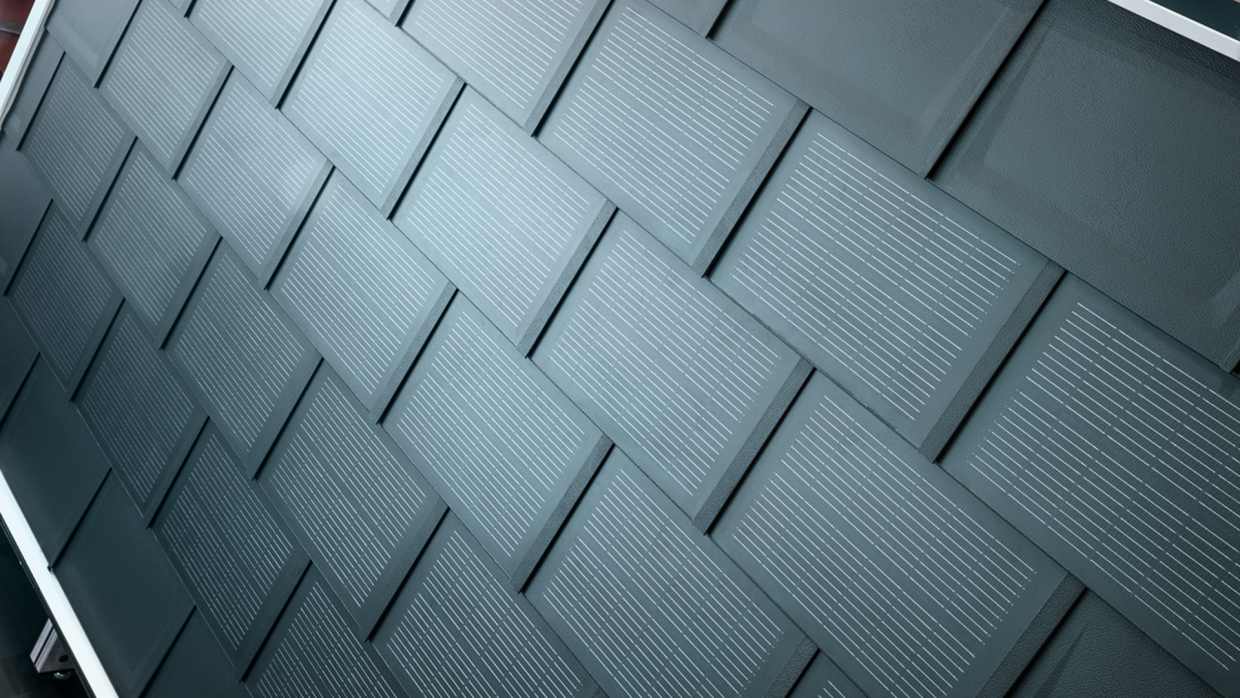
Every tile becomes a solar cell, colour-matched to the original roof of St Charles Borromeo Church, Copyright: PREFA / Croce & Wir
Whether ceramic solar roof tiles, aluminium-integrated photovoltaics or standing-seam metal roofing, whether legislative reform or landmark court rulings, the pace of innovation in heritage roof restoration is remarkable. As technology advances and legal frameworks evolve, new opportunities are emerging to bring heritage conservation and the energy transition together—developments that would have seemed almost unimaginable only a few years ago.