



The bell – a musical instrument that is put under a great deal of strain

2:00 PM - 3:00 PM Thu, 05 Nov

Short description

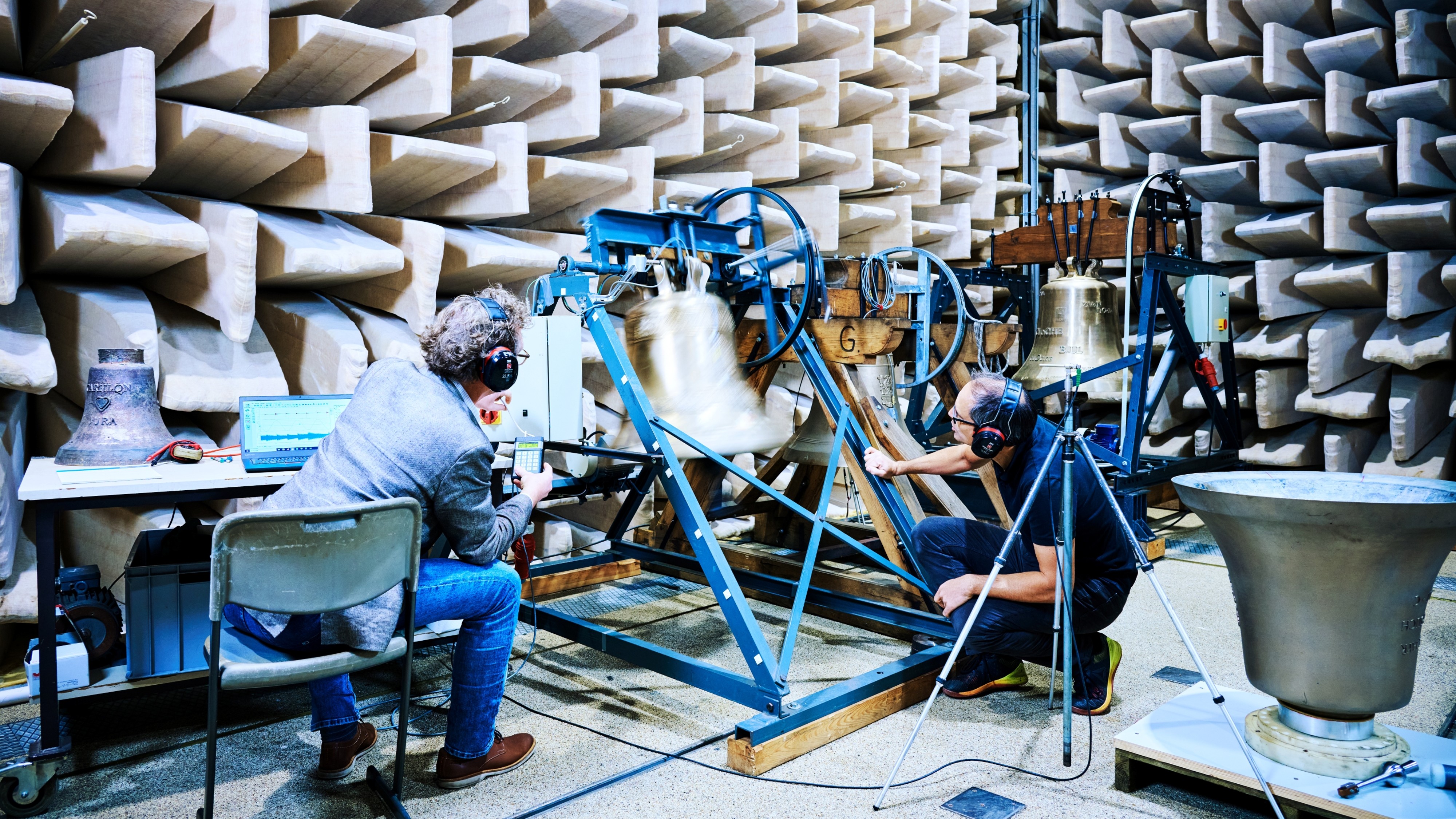
The ringing of bells causes mechanical stress and fatigue cracks, necessitating annual repairs, during which historical inscriptions are often lost. The main cause of cracks is material fatigue resulting from impacts and tensile stress. To extend the bells’ service life, these stresses must be reduced by optimising ringing conditions. The European Centre of Competence for Bells (ECC-ProBell) has been conducting research for over 20 years into preventing such damage and has developed methods for assessing fatigue risk, which enable the targeted optimisation of ringing conditions.

Description

The ringing of bells places high mechanical stresses on the bronze bell body. Every year, numerous bells have to be removed from the tower to repair fatigue cracks by welding. The effort involved in such work is considerable, and in many cases valuable inscriptions or decorations on historic bells are irreversibly damaged or destroyed during the welding process. Furthermore, bells are also damaged by severe wear at the points of impact or by cracks in the bell crown.

The main cause of cracking in bells is material fatigue, which is caused either by the repeated impacts of the clapper or by excessive tensile stresses on the bell crown. To ensure the long-term preservation and effective extension of the service life of bells, the stresses acting on the bell during ringing must therefore be reduced by optimising the ringing conditions and striking parameters.

The European Centre of Excellence for Bells, ECC-ProBell, has been conducting research into bells for over 20 years with the aim of preventing damage in the long term and achieving gentle ringing whilst maintaining good tonal quality. The causes and interrelationships underlying the development and propagation of fatigue damage and impact wear in bells have been comprehensively elucidated and made accessible to engineering analysis. The resulting design methods now allow for the mathematical determination of the risk of fatigue damage to bells, as well as the targeted manipulation of the tonal characteristics of the ringing bell. The ringing conditions can thus be specifically optimised to meet different requirements – whether from a heritage conservation perspective to minimise the risk of damage, from a musical perspective to improve sound projection or volume, or from a structural dynamics perspective to prevent damage to bell towers that are structurally vulnerable to vibrations.

probell.de

Speaker

Information about the program

Event Location

CCL, Lecture room 9, Level +2

Exhibitors