
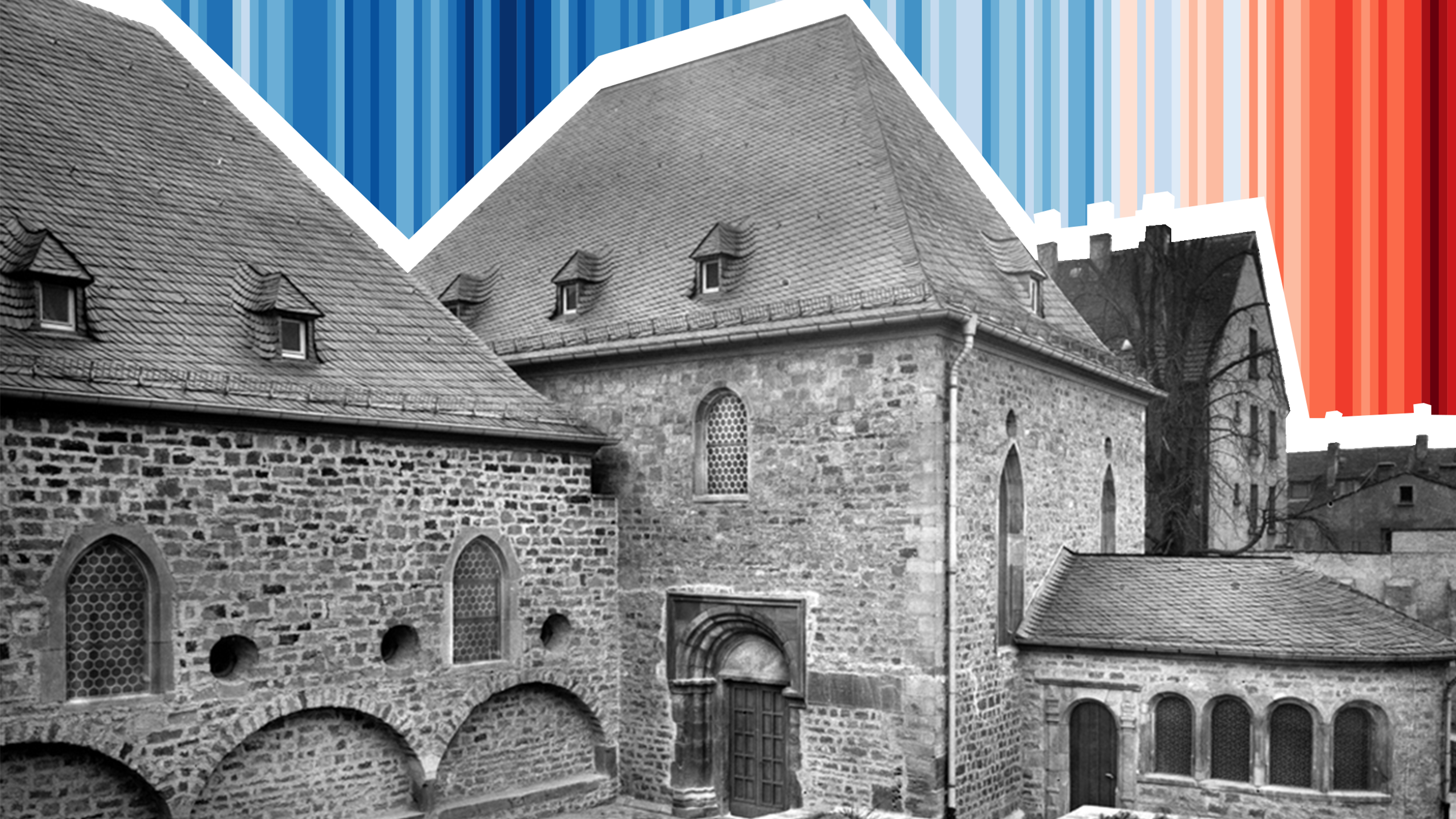
BUILDING INFORMATION MODELING IN DER DENKMALPFLEGE. VOM PLAN ZUM DATENINFORMATIONSMANAGEMENT

From Survey to Information - HBIM in Heritage Practice

10:00 AM - 1:00 PM Sat, 07 Nov

Short description

How can HBIM support documentation, research and conservation of historic buildings? Using the the example of the DBU-funded research project Synagogue in Worms as a real-world case study, the workshop explores the complete HBIM workflow – from digital survey and modelling to information management, communication and practical use in heritage conservation.
In this modular workshop, Mainz University of Applied Sciences, as a guest of VDL AG Historische Bauforschung, will demonstrate how HBIM can be applied in practice. Opportunities and challenges will be discussed together.

Description

HeritageBIM (HBIM) combines deformation-accurate 3D scanning with customized data management. It provides a solid foundation for planning and serves as a tool for permanently maintaining data for the operation and monitoring of a cultural monument.

The workshop provides a compact, practice-oriented introduction to HBIM from the perspective of heritage conservation and historic building research. Using the ongoing HBIM project of the Synagogue in Worms, participants will discuss where HBIM can provide added value compared with conventional documentation and planning methods.

The programme addresses key questions concerning survey methods, geometric accuracy and modelling effort, as well as the structure, integration and communication of heritage-related information. Particular attention is given to determining which information belongs in the 3D model, which should be managed as structured data and which documentation may remain outside the model.

The final part takes the form of an open HBIM workshop, demonstrating directly how point-cloud data, an IFC-based HBIM model and associated information can be used and developed in practice. Throughout the session, discussions and exchanges with participants will connect the presented methods with practical requirements from heritage conservation and building research.


10:00 – 10:40 HBIM COMPACT: What is HBIM, and how does it benefit me?

- HBIM from the Perspective of Historic Preservation

- Brief Introduction to the Research Project

- Structure and Communication in HBIM Projects

- Discussion and Q&A Session

10:45 – 11:25 HBIM - Geometry: How Much Accuracy and Detail Does a 3D Monument Need?

- Presentation of the HBIM model of the Worms Synagogue

- Surveying and modeling techniques in light of questions regarding accuracy requirements and effort

- Discussion and Q&A session

11:30 – 12:10 HBIM - Data and Communication

- Data Implementation in HBIM

- Technical Aspects of Historic Preservation and Historical Building Research

- Technical and Practical Implementation

- Communication via the Model – Digital Networking

- Discussion and Q&A Session

12:15 – 13:00 HBIM Workshop: Open-Heart Surgery

- Live Demonstration: Watch how an HBIM model is created: From point cloud to model and data structure

- Join us in discussing practicality and workflow, and feel free to share your experiences and ideas!

- Outlook on HBIM and the completion of the research project in 2027


The Research Project:

“Heritage Building Information Modeling (HBIM) as a Method for Documentation, Planning, and Monitoring to Mitigate Harmful Environmental Impacts: The Case of the Worms Synagogue, a UNESCO World Heritage Site,” funded by Deutsche Bundesstiftung Umwelt (DBU) ( https://www.dbu.de/projektdatenbank/39938-01/ ). A research project of the Institute of Architecture at Mainz University of Applied Sciences in collaboration with the Rhineland-Palatinate Directorate General for Cultural Heritage (Directorate for State Monument Preservation and World Heritage Secretariat), the City of Worms, and specialized firms for historic preservation.

Speaker

Information about the program

Event Location

CCL, Hall 4, Level +1

Exhibitors